
A memoir about music, healing, and the unexpected ways art becomes medicine
Standing in Manchester Sunshine
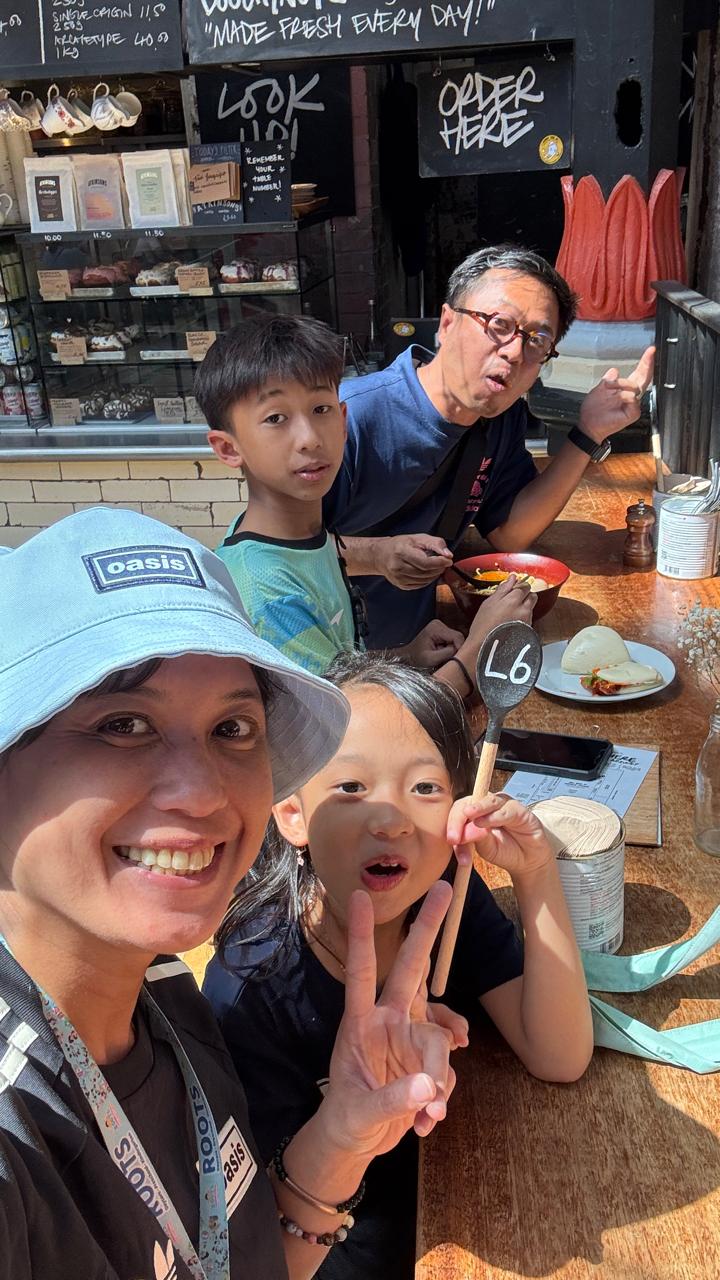
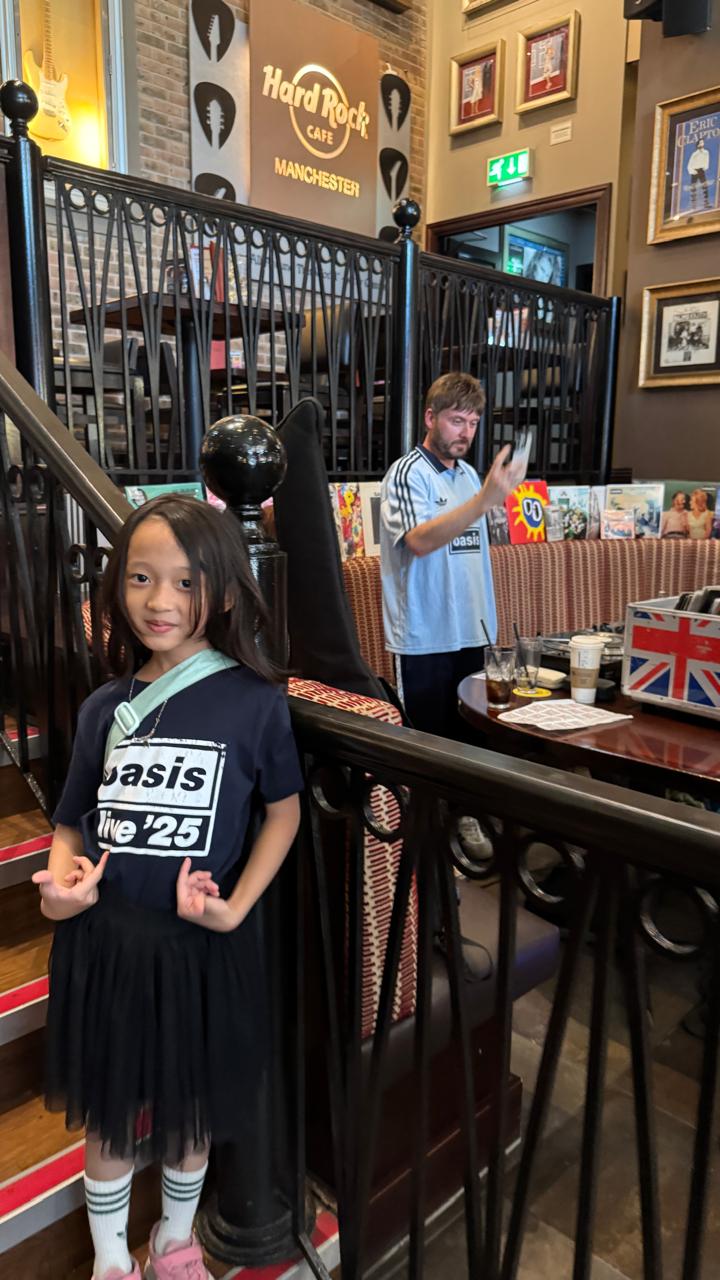
July 12th, 2025. I’m standing in Manchester, watching the city pulse with an energy I haven’t felt in decades. Tomorrow is my 41st birthday, and today, purely by cosmic coincidence, Oasis is playing their reunion concert at the very venue where my musical salvation began thirty years ago. The irony isn’t lost on me: I’m here, in the heart of it all, yet unable to attend because my children are too young for the chaos of a rock concert.
But as I walk through the streets filled with fans wearing vintage band t-shirts, hearing “Wonderwall” drift from every place, I realize something profound: I don’t need to be inside that venue. Oasis has been playing the soundtrack to my life for so long that I carry the concert within me everywhere I go.
This is the story of how five working-class lads from Manchester, particularly one brilliant, troubled songwriter named Noel Gallagher, created music that became medicine for a raging and broken neurodivergent twelve-year-old girl who was breaking every rule but desperately seeking her authentic self, and how those same songs continue to heal, inspire, and connect generations of my family today.
The Architecture of Hope
1996. I am twelve years old, drowning in my own intensity.
My childhood wasn’t the kind that makes for pleasant dinner conversation, but it also wasn’t a simple tragedy. I was what we’d now recognize as a neurodivergent child in a world that had no framework for understanding ADHD, a raging kid who broke every school rule, fought anyone who crossed me, and questioned everything with the relentless intensity that comes with a brain that never stops moving.
Breakdown moments came like sudden storms, leaving me gasping for air in a world that felt too sharp, too loud, too overwhelming for my young nervous system. I was angry, constantly angry, but underneath that anger was something else: a desperate need to understand myself and find my place in a world that felt too small for what was burning inside me. I needed something—anything—that could hold the weight of what I was carrying.
Maybe I don’t really want to know how your garden grows / ‘Cause I just want to fly
But it wasn’t just “Live Forever.” As I dove deeper into their catalog, I discovered “Don’t Go Away”, a song that seemed to understand the terror of abandonment that lived beneath my anger. “Half the World Away” captured the loneliness of feeling different and misunderstood. “I Hope, I Think, I Know” spoke to the uncertainty of a young person trying to navigate a world that felt hostile to her intensity.
And then there was “Supersonic,” which delivered a message that would become foundational to my sense of self: I need to be myself, I can’t be no one else.
These weren’t just songs; they were an entire emotional vocabulary for a kid who had feelings too big for her body and no other way to make sense of them. Noel Gallagher had somehow constructed hope out of chord progressions, built bridges over despair with nothing but melody and meaning. While my American peers were drowning in the beautiful darkness of Nirvana and Smashing Pumpkins—music that perfectly articulated pain but offered no exit strategy—Oasis was building cathedrals of sound that acknowledged struggle while always pointing toward transcendence.
The psychological mechanics of what Noel accomplished in his songwriting are remarkable when you examine them closely, especially for a neurodivergent mind that processes emotion and meaning differently. His songs follow patterns that mirror the actual processes of emotional healing, but they also validate the experience of being intense, questioning, and different:
Acknowledgment: The verses often begin in uncertainty or difficulty, but without shame. “Today is gonna be the day that they’re gonna throw it back to you.” Not denial, not apology for being too much, but recognition and preparation.
Validation: Songs like “Whatever” (my husband’s favorite) essentially say: your feelings are valid, your perspective matters, the world might not understand you, but that’s their problem, not yours.
Building: The pre-choruses create tension and anticipation, mimicking the way hope actually builds in real life, gradually, with effort, with the kind of persistence that ADHD minds understand intimately.
Release: Those massive, anthemic choruses don’t just provide musical catharsis; they create what psychologists call “corrective emotional experiences”, moments where the nervous system learns that overwhelming feelings can resolve into something beautiful rather than destructive.
Integration: The bridges and outros help process the emotional journey, leaving you changed rather than just temporarily lifted.
For a kid who was constantly being told to be quieter, calmer, and more compliant, Oasis said: be louder. Be more. Take up space.
This wasn’t accidental songcraft. This was a trauma survivor creating musical medicine from his own experience of transcending a difficult childhood in working-class Manchester, with an abusive father and the kind of family chaos that either breaks you or teaches you to build something better from the pieces.
But here’s what’s remarkable about my journey with these songs: they didn’t just help me survive my intensity; they helped me transform it. The same rage that got me in trouble at school, the same questioning that frustrated teachers, the same inability to be quiet and compliant that made me seem “difficult”, Oasis helped me understand these weren’t flaws to be fixed. They were strengths to be channeled.
My mother had taught me how to set goals, how to use my intensity as fuel rather than letting it consume me. I graduated well from every stage of education, not despite my ADHD, but because I learned to harness that relentless energy. And Oasis provided the soundtrack for that transformation.
Their songs taught me something crucial: someone out there probably had a tougher life than mine, so “it is what it is”, but that doesn’t mean accepting defeat. It means accepting reality and then deciding what to build from it. The anger that I once felt destructive became the passion that drives my writing. The questions that once seemed disruptive became the curiosity that fuels my creativity. The intensity that once isolated me became the empathy that helps me connect with others who feel too much in a world that often asks us to feel less.
“All Around the World” became more than just a song; it became a mission statement. You’ve gotta spread the word. The word being: your life has value, your perspective matters, your intensity is a gift, and gentleness can coexist with strength.
The Generational Transmission of Resilience
As I grew older, I began to understand something crucial about why Noel’s songs worked as healing agents: they came from someone who understood my struggle intimately, not because he’d read about it in books, but because he’d lived it and found a way through.
In studying the biographies of people who create transformative art, and indeed, in examining the lives of many who go on to create positive change in the world. I’ve discovered a pattern that illuminates why Oasis’s music carried such healing power. Behind many remarkable individuals, you find a mother who was simultaneously strong and loving, who provided both security and inspiration despite difficult circumstances.
Einstein had Pauline, who nurtured his curiosity while holding their family together. Jane Goodall had Vanne, who supported her dreams when society said they were impossible. Malcolm X had Louise, who instilled dignity and intellectual curiosity despite facing unimaginable hardships. Martin Luther King Jr. had Alberta, who raised him with both love and awareness of his potential to change the world. James Baldwin had Berdis, who protected his sensitivity while teaching him strength.
My own mother belongs in this category, a woman who somehow managed to be my safe harbor while the storms of our circumstances raged around us.
Noel and Liam Gallagher had Peggy, a woman who left an abusive marriage and raised her sons with fierce love and determination. She worked multiple jobs, protected them from their father’s violence, and somehow instilled in them both the confidence to dream bigger than their circumstances and the resilience to survive the journey toward those dreams.
This statement isn’t meant to diminish anyone’s struggle, but rather to highlight how crucial that foundational love becomes in determining whether artistic sensitivity becomes a tool for healing or a weapon for self-destruction.
When I listen to “Don’t Look Back in Anger” or “Live Forever,” I’m hearing the musical expression of someone who learned from his mother that love could be stronger than chaos, that hope could be more powerful than circumstance. That’s why these songs could function as medicine for me, a broken twelve-year-old: they contained the emotional DNA of transcendence.
The Daily Practice of Musical Medicine
2018. Jakarta. I am 15 weeks pregnant, standing in a crowd watching Liam Gallagher perform.
The irony strikes me as I sing along to “Wonderwall” with my unborn child moving inside me: these songs have literally been with me through every major transition of my life. They’ve become part of my emotional operating system, tools for regulation and meaning-making that I use as automatically as breathing.
This isn’t nostalgia. This is something more profound: the integration of art into the architecture of daily survival.
Every morning when I play their music while making breakfast, I’m not just listening to songs, I’m engaging in a practice of self-acceptance and hope. When “Don’t Go Away” comes on during a difficult day, it’s not background noise; it’s a reminder that the people and things we love don’t have to disappear just because life gets complicated. When “Stop Crying Your Heart Out” plays, it’s validation that pain is temporary, but resilience is permanent. When my children hear these songs and begin to sing along, they’re not just learning melodies; they’re inheriting emotional tools and the understanding that being different, being intense, being yourself is not just acceptable but essential.
My husband understands this intuitively. When “Whatever” comes on—his favorite—and he sings along with that defiant, loving energy, our children see that their parents refuse to apologize for who they are. When we put on any Oasis album during family dinner, we’re not just playing music; we’re reinforcing our family’s emotional vocabulary, creating shared reference points for hope, authenticity, resilience, connection, and the radical act of being yourself in a world that constantly asks you to be someone else.
The neuroscience of this process is fascinating. Repeated exposure to music that triggers positive emotional responses literally rewires our neural pathways, creating what researchers call “musical memories” that can be accessed for emotional regulation throughout our lives. But more than that, when we share this music with our families, we’re creating what psychologists term “collective efficacy”, shared beliefs about our ability to overcome challenges together.
This is how healing music works across generations: it doesn’t just make individuals feel better; it creates families and communities with shared resources for facing difficulty and thriving together.
The Coincidence of Healing
July 12th, 2025. Manchester. Age 40.

Standing in that Manchester street, feeling the city’s electric anticipation while knowing I couldn’t be part of the concert, I experienced something unexpected: completion rather than disappointment.
The songs had already done their work. They’d carried me through childhood trauma, supported me through pregnancy, provided the soundtrack for raising my own children, and created bonds that transcend the original context of their creation. Being physically present at their reunion concert would have been wonderful, but it wasn’t necessary for my relationship with this music to feel complete.
This realization illuminated something crucial about how art functions in our lives: the most transformative creative works don’t just entertain us or even inspire us temporarily. They become integrated into our personal mythology, part of the story we tell ourselves about who we are and what’s possible.
My relationship with their entire catalog—from the obvious anthems to the deep cuts like “Half the World Away” and “I Hope, I Think, I Know”—isn’t just musical preference. It’s a comprehensive emotional toolkit. Each song serves a different function: some for motivation, some for comfort, some for validation, some for transformation. It’s a musical embodiment of my belief that connection and hope are always possible, even in the darkest moments. Together, they create a complete philosophy of living authentically in a complicated world.
When my children sing these songs, they’re not just performing music; they’re accessing the emotional legacy of authenticity that these songs helped me build and that I’m now passing on to them. They’re learning that it’s not just okay to be yourself, but it’s essential. They’re learning that gentleness and strength aren’t opposites, that intensity can be channeled into creativity and connection, that life’s difficulties are not punishments but opportunities to develop resilience and empathy.
The Misunderstood Healers
One of the great tragedies of how we discuss popular music is our tendency to conflate the messenger with the message. Because Oasis lived the rock and roll lifestyle, the fights, the excess, the chaos, their music is often dismissed as somehow less meaningful or transformative than more “serious” artists.
But this misses something essential about how healing actually works. The Gallagher brothers didn’t need to be perfect people to create perfect medicine. In fact, their very imperfections, their struggles with anger, their battles with addiction, and their inability to sustain relationships made their music more authentic, not less.
Noel Gallagher had this remarkable ability to wrap profound emotional truths in deceptively simple, anthemic packages. Unlike the introspective darkness of grunge, his songs contained what you might call “aspirational melancholy”; they acknowledged pain and struggle but always pointed toward transcendence.
Noel wrote songs about hope and transcendence precisely because he knew what it felt like to need both. His lyrics about looking back in anger, about maybe finding salvation, about flying, these weren’t abstract concepts to him. They were hard-won wisdom from someone who had to learn how to build meaning from chaos.
The genius lies in how he constructed hope. Rather than toxic positivity or empty optimism, his lyrics often acknowledged being “slowly walking down the hall, faster than a cannonball” or feeling lost, but then offered these soaring, communal choruses that made you feel less alone. The music itself – those massive, enveloping walls of sound – created a sonic embrace that could hold whatever you were carrying.
The rock and roll lifestyle wasn’t separate from the healing power of their music; it was part of it. These were damaged people creating undamaged art, hurt individuals building tools for healing that they themselves desperately needed.
When I watch documentaries about their career, when I read about their feuds and breakdowns and struggles, I don’t see cautionary tales about the dangers of fame. I see human beings courageously transforming their pain into something that could help others, even when they couldn’t fully help themselves.
This is perhaps the most important thing I want Noel and Liam to understand, if they ever read this: your music wasn’t a byproduct of your success or your lifestyle. Your music was your contribution to the world’s healing, regardless of what else was happening in your lives. You may have been “bad influences” in terms of behavior, but you were profoundly positive influences in terms of the emotional tools you gave people like me.
The Continuing Revolution
2025. Planning to be there at the reunion 25.
As I write this, my children know every word to OASIS’s songs. They’ve never lived through the Britpop era, never experienced the cultural moment that made Oasis global superstars. But they understand intuitively what I learned at twelve: these songs contain something essential about human authenticity and the courage to be yourself.
My husband and I often marvel at how our musical DNA has been passed down not through genetic inheritance but through daily practice. When we play OASIS’s songs together during car rides, we’re creating a family culture that celebrates intensity, questions convention, and refuses to apologize for taking up space in the world.
This is how truly transformative art works: it transcends its original context to become part of the permanent human conversation about meaning, connection, and thriving. My children’s relationship with these songs will be different from mine, shaped by their own experiences and challenges. But the core truth that Noel embedded in these melodies, that authenticity is not negotiable, that your intensity is a gift, that gentleness and strength can coexist, that you have the right to be exactly who you are, will remain constant.
When we finally see Oasis perform together again, it won’t just be a concert. It will be a celebration of the idea that art can outlast the chaos of its creation, that healing can be shared across generations, and that sometimes the most broken people create the most beautiful tools for wholeness.
The songs that saved me at twelve continue to nourish my family at forty-one. They’ve become part of our emotional DNA, part of how we understand what it means to be human in a difficult world while refusing to let that difficulty diminish our capacity for joy, authenticity, or connection.
This is the true power of music: not just to soundtrack our lives, but to become part of the architecture of our thriving, passed from one generation to the next like the most precious inheritance we can offer, the knowledge that beauty can emerge from struggle, that being yourself is not just acceptable but essential, that intensity can be transformed into gentleness without losing its power, and that sometimes, if we’re very lucky, we find artists who understand our pain need to be authentic so deeply that they transform it into medicine we can share with the world.
Epilogue: The Concert We Carry
The reunion tour will be wonderful, and I hope to be there with my family. But the true reunion happened thirty years ago when a broken twelve-year-old girl found hope in the sound of five lads from Manchester who understood that the most powerful response to a difficult world isn’t anger or despair, it’s the radical act of creating beauty that others can use to heal.
Thank you, Noel. Thank you, Liam. Thank you for being brave enough to transform your pain into our medicine. Thank you for proving that hurt people don’t have to hurt people; sometimes, they can heal them instead.
Maybe you’re gonna be the one that saves me / And after all, you’re my wonderwall…

 YAMINA HASNI
Leave a comment