I didn’t always set out to be a leader. I just wanted to be present.
Honestly, I don’t think I was born with the so-called “leadership materials.” Especially when I read biographies of famous leaders, their common threads are wisdom, emotional regulation, empathy, understanding their audience, public speaking, the ability to inspire others to do good, and outstanding intelligence. All of that felt very far from who I thought I was.
But everything started to shift…
When my son was born in 2011, I made a decision that changed everything: I left my job as a journalist. I had spent years chasing stories, meeting deadlines, writing from presidential offices and protest grounds. However, motherhood introduced me to a story I hadn’t yet learned how to tell: my own.
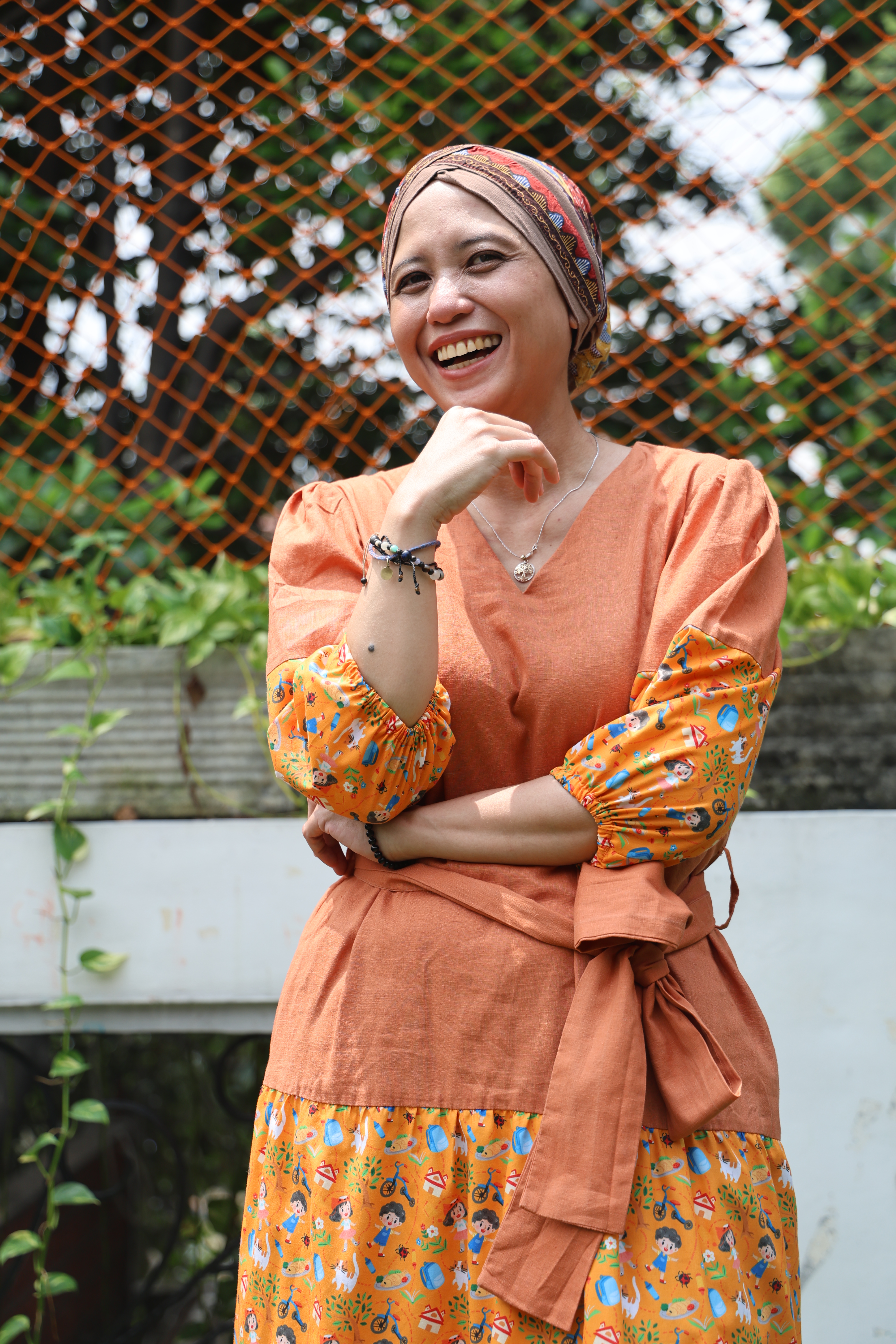
I became a stay-at-home mom not out of necessity, but from a deep desire to be fully present. That decision pulled me into a new kind of learning: parenting, child psychology, emotional development, executive functioning, and later, systemic behavior change.
As I observed my child grow, I began to see leadership not in titles or hierarchies, but in everyday actions: how we model trust, hold space for others, and remain grounded while helping others grow.
When I decided to become a mother– and realized how much I enjoyed this new role—I found myself reflecting deeply. It felt like I was being reborn. To truly understand my child, I needed the knowledge and the tools. So I began learning everything I could about child development. And unexpectedly, through that process, I began to understand myself.
Every class I took, every book I read, every conversation I had—and of course, every moment spent raising my children—became a form of integration. I started connecting the dots with past experiences, slowly understanding how the world works and how I had grown within it.
Eventually, I realized something powerful: I was actually raised by a mother who had an intuitive grasp of system thinking.
Looking back, I could see how she raised me with a sequence:
- Values (why)
- Sense of responsibility (what)
- Empathy and understanding of others (who)
- Curiosity, which led to knowledge and skills (how)
- And when and where were always adjusted to context.
The value of truth and kindness always came first. From that, a sense of love and belonging naturally emerged, making me capable of nurturing others. It began simply: taking care of animals. But that grew into something deeper.
Because nurturing isn’t just about care. It requires grit, commitment, endurance, and the ability to strategize: managing time, money, routines, and so much more.
Once you’ve learned how to create a strategic plan and develop a strong sense of responsibility (in my house, this usually meant: “If you’ve started something, you must follow through until you master it”), the next lesson is empathy and understanding others. Why? So that you can read social situation: knowing when to ask for help, collaborate, or delegate.
All of this was nurtured alongside a constant encouragement of curiosity.
My mother loved to answer my questions with more questions.
If I asked, “Mom, why do clouds move and keep changing shape?” she wouldn’t give me a direct answer. Instead, she’d ask, “What do you think?”
Then we’d test my assumptions and hypotheses together, by checking encyclopedias or reading other books (this was before Google, let alone ChatGPT). I remember being obsessed with cats, and my mom took me along to her graduate classes at IPB University. While she was in class, I spent hours in the library, copying notes from animal science books into my little notebook.
Because I had a strong sense of responsibility, I felt the need to gain the knowledge and skills to live up to that responsibility.
So when I became a mother, I actually already had the foundations of Parenting 101. That’s why, when I began learning about the brain and child development, it didn’t feel foreign to me. Integration came naturally. It was as if the program was already installed in my mind, I just needed the right prompts to activate it.
And from that point on, the journey evolved: from raising one child with intention to initiating a large-scale movement and leading an educational institution.
That was the seed of Genuine Leadership.
What is Genuine Leadership?
For me, Genuine Leadership is not a method. It’s not about being in charge. It’s about being in connection.
Genuine Leadership is showing up with your whole self. It means leading with warmth, vulnerability, presence, and purpose. It’s rooted in self-awareness, grounded in values, and expressed through authentic relationships: whether you’re holding a child’s hand, facilitating a workshop, mentoring a team, or building a movement.
It’s the kind of leadership that doesn’t require applause. It requires truth.
Because I learned system thinking from a mother who juggled full-time work, graduate studies, and caring for her aging parents, I came to understand that true leadership is about becoming a whole human being. It’s not about being a towering figure others fear or revere from a distance, but more like being someone people feel safe to approach, connect with, and grow alongside.
A true leader is actually the one most capable of building connection. Because leadership is not about authority or charisma. It’s deeply rooted in relationships.
A leader is someone who lives out the values of goodness and truth in the most real, tangible ways. Someone who is always willing to learn, not just from prestigious masterclasses, but especially from the people around them.
A leader is someone who understands social dynamics. They don’t carelessly point fingers and give orders. Instead, they thoughtfully map out team members’ strengths and foster collaboration to ensure the best possible outcomes.
Because in the end, a strong sense of responsibility reveals itself through resilience, honesty, and the ability to make clear decisions. A true leader doesn’t play the victim, because they are prepared to be accountable for every decision they make. And when they make mistakes, they own them and learn from them.
Who Inspired Me?
This concept of Genuine Leadership was never built alone; it grew from many voices and lived experiences.
I learned from the Prophet Muhammad (PBUH) that leadership is deeply relational, based on service, trust, and mercy. His ability to hold strength with softness became a model I continue to strive for.

I was deeply inspired by Brené Brown, whose teachings on vulnerability and courage gave me the language to own my story and lead from it. Her reminder that “vulnerability is the birthplace of innovation, creativity, and change” became an anchor.
Simon Sinek taught me that people don’t buy what you do, they buy why you do it. He helped me understand leadership is about building movements rooted in belief, not just behavior.
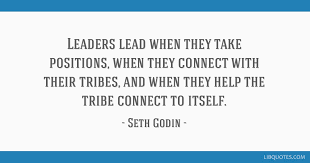
Seth Godin’s work on tribes helped me see leadership not as commanding attention, but creating belonging. His words challenged me to stop seeking permission and start building the connection.
And yes, oddly enough, I also found insight in the family-style leadership of the Sicilian mafia, not in its violence or crime, but in its unwavering loyalty, unspoken trust, and the deep sense of belonging that came from being part of a “family.” It showed me that even flawed systems carry fragments of wisdom, if we’re willing to look deeper.
Lastly, I’m always inspired by the mothers and educators around me. Women who lead without being given titles and hold communities together through care, teaching me what it means to be soft and firm.
And of course, all of this exists alongside my love for reading history and biography books that explore so many different leadership styles worldwide. Those stories have shaped parts of the Genuine Leadership concept I now live by.
When It Became Clear
What started as just a concept in my head slowly began to take shape, hand in hand with the personal healing journey I was on to process past trauma and truly understand myself.
Because without the hard work of emotional regulation and trauma healing, all those beautiful leadership concepts remain just that—concepts. Untouched. Untested. Unlived.
Genuine Leadership has to start from within.
The first person who must be empowered is yourself—only then can you create a ripple effect that reaches your family, community, environment, and society at large.
I never imagined I would implement it so soon. I was still learning. I wasn’t sure of myself yet.
And then, suddenly…
The pandemic cracked everything open.
Suddenly, we weren’t just running a preschool—we were a lifeline.
For mothers trying to survive.
For children learning to regulate their emotions in uncertainty.
And for our educators, trying to adapt without losing their center.
That’s when I knew: this isn’t just about managing a team or delivering education.
It’s about leading through connection and being fully human, even in crisis.
That’s when Genuine Leadership stopped being my idea and became our shared practice.
Looking back, that moment of chaos—when everything felt overwhelming—was a divine nudge from Allah. A signal that it was time for me to step forward. Finally, I want to bring everything I’d been shaping to life through concept work and healing.
(Hahaha… turns out, if I hadn’t been pushed into a corner, I might’ve stayed too comfortable for too long.)
The “warung-style system” we used to run at AKAR shifted into a complete survival mode system during the pandemic. We had to do everything fast. We maximized every available resource, reached out to everyone we could collaborate with, and slammed the gas pedal as hard as we could to keep ourselves from falling too deep into the hole.
I kept learning and learning without pause. When the pandemic began to ease, I realized that I had to urgently and effectively activate a management system that would allow every person at AKAR to run the business more automatically.
The pandemic taught me that stability can disappear instantly, and without a proper system in place, the cost of surviving becomes much higher.
That’s why this year, AKAR is going through a massive shift—from a simple, intimate system (when we only had a small team, a tight-knit community, a few partners and customers) to a fully integrated system, because our organization has grown.
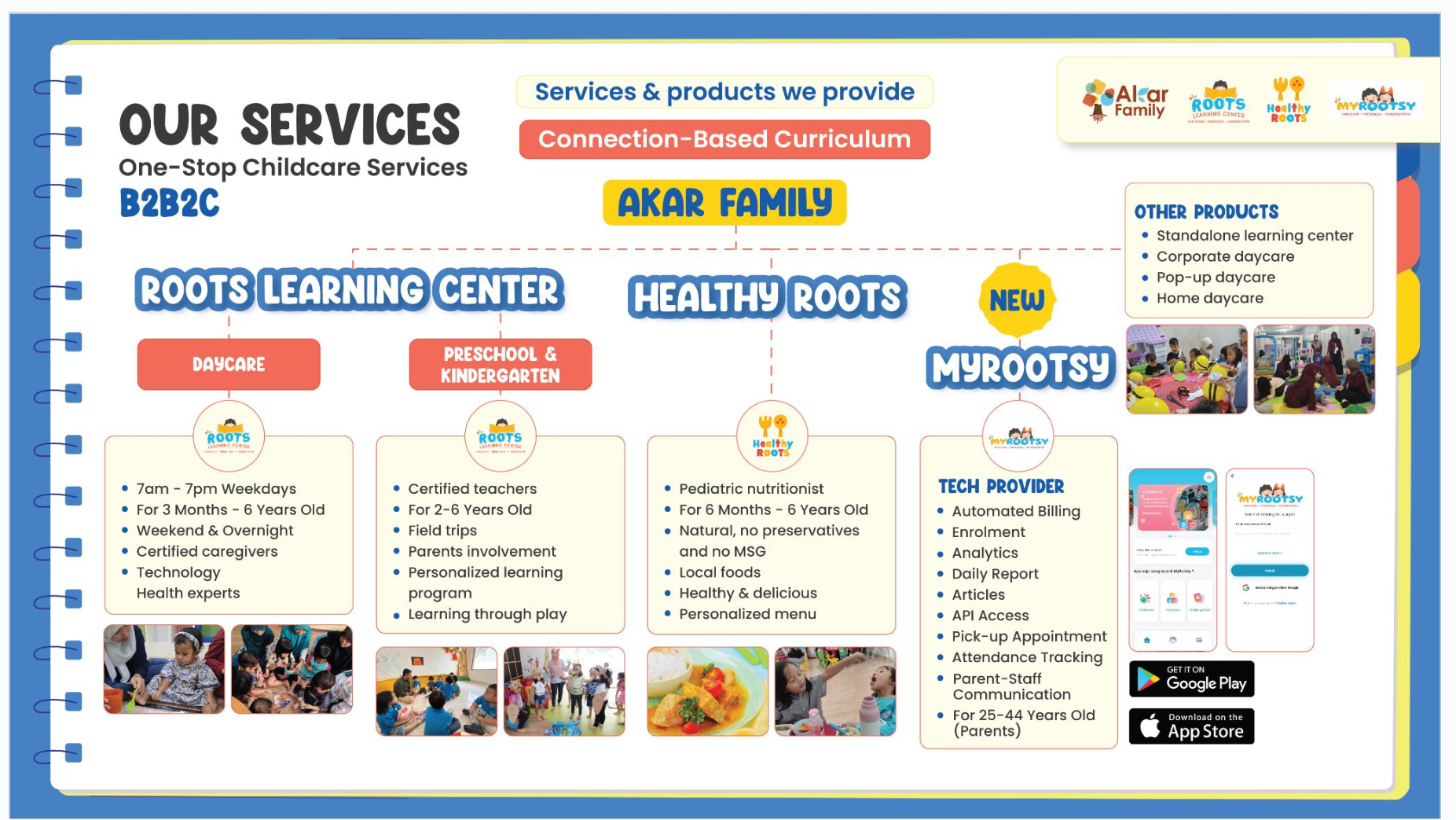
This systems thinking, rooted in our values of mutual care and connection, also sparked my bigger desire: to create a positive impact for even more people.
That’s why we’re building an app: a platform we hope will one day integrate our entire management system.
Educator and parent training, quality standards, curriculum, policies, SOPs, and operational tools—so that every early learning center in Indonesia can use it to grow, sustainably and with heart.
How I Practice It
My ability to think in systems—integrated, empathetic, and grounded in values of truth, responsibility, and kindness—has become my superpower.
It’s the very thing that has helped me strengthen my brain, even with its natural challenges.
(I have a brain that physiologically lacks dopamine and struggles with executive functioning.)
But because of connection, because of purpose, I find ways to stretch my focus, sharpen my thinking, and expand my vision.
That’s why I continue to grow AKAR with a strong mission: to create meaningful impact for as many people as possible.
The systems thinking that my mother once instilled in me—I now embed in AKAR.
And it all starts with internalizing our core value of connection.
At AKAR Family, we don’t just teach children. We teach our team. We teach ourselves.
I practice Genuine Leadership through:
- Presence: Slowing down to truly listen, even when busy.
- Storytelling: Sharing my failures, not just my strategies.
- Empowerment: Trusting people enough to let them lead.
- Connection: Prioritizing people over processes. Disini juga justru saya menanamkan pentingnya boundaries dengan landasan value, bahwa kita semua punya Batasan toleransi yang mengacu pada nilai saling sayang saling jaga, nilai kebaikan dan kebenaran.
- Adaptability: Embracing the unknown with openness.
In my personal life, as a mother of two, I’ve learned that parenting is leadership. How I respond to conflict, apologize, and regulate myself teaches my children how to lead themselves. And in our IBU ASAKA workshops, I see leadership blossoming in mothers who once doubted their worth until they learned their stories were powerful enough to lead change.
Why It Matters
So… what’s the point of all this?
Why go through the trouble of building such a complex system that centers on connection and includes “assessment” based on relationships when other schools or workplaces use something much simpler? Most of them rely on numerical evaluations and performance metrics. Easy.
Maybe if I were running a helmet factory, I’d do the same: evaluate the output purely as a product. But that’s not my reality.
I lead living, breathing beings everywhere.
I lead an educational institution filled with diverse team members, serve parents as our customers, and hold the growth and development of children as our primary goal.
I lead a community of changemakers through Peri Bumi, who run their local projects—mothers, youth, and even primary school students.
At home, I’m a leader too: implementing systems and routines for my children, the team who supports our household, and yes, even for our cats.
My world isn’t built on competition. It’s built on collaboration.
My world celebrates each person’s achievements because we are connected, not because we’re outperforming one another.
And in my world, developing competence should never come at the cost of others—it should benefit others. It should uplift everyone, including the planet we live on.
That’s why Genuine Leadership matters.
When we lead from a connection, we create better systems and a better world.
We live in a world obsessed with performance. But I believe what our children—and our communities—need most is presence.
That’s why I lead AKAR Family through the lens of Genuine Leadership. That’s why I created a curriculum rooted in connection. That’s why I show up in classrooms, on stages, and even in messy WhatsApp groups or social media threads—with the same voice and heart.
Genuine Leadership isn’t about always being right but being real.
It’s about leading from a place of mutual care and protection—“saling sayang, saling jaga”—as the foundation for every decision we make.
Genuine Leadership is a wholehearted way to lead.

 YAMINA HASNI
Leave a comment