
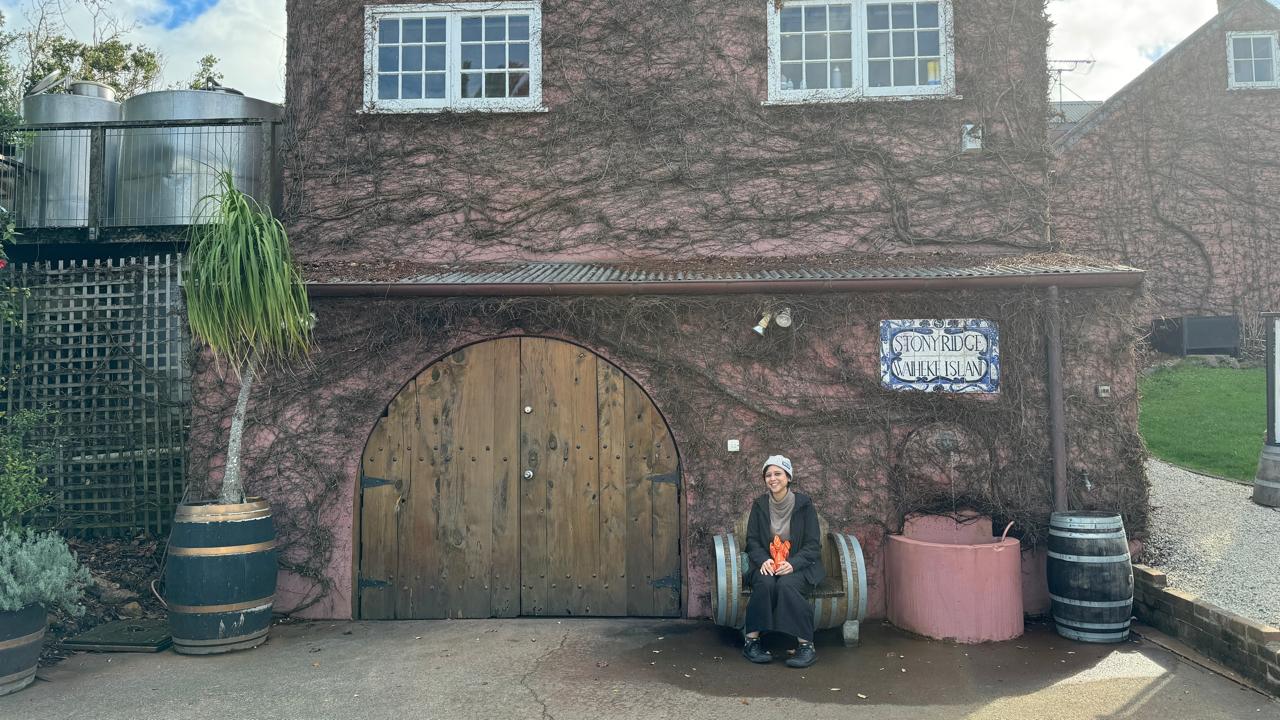
40 years old
Instead of fixating, I believe more in the concept of rethinking. I think that the human brain works on the principle of neuroplasticity. We constantly change and can adapt to anything, anywhere, anytime. The choice is in our hands. Do we want to or not?
That’s why I smile when friends say there are extreme changes at 40 or they feel old at 40.
Every birthday, I never feel older than the previous years. Now, I lead a healthier and more mindful lifestyle than in my younger days, so I rarely get sick. I seldom feel aches, and my mind feels more at peace.
So, I smile when my friends are afraid of aging. I’m not scared; why should I be? I fear that if I leave Indonesia one day, I might forget my love for Indonesia. What I fear is if I die (which can happen at any time, without waiting to get old), and there’s no one left to take care of and love my children.
Isn’t aging inevitable? Isn’t it something that will happen if we don’t die? Doesn’t it happen to every living being?
But there’s no absolute statement that aging means aches, getting sick quickly, being sensitive to the wind, or becoming more emotional. It seems these things can happen to anyone at any age. It feels like we’re being scared of “Age 40,” which, for me, is no different from other ages.
===
The human rational brain, or prefrontal cortex, only begins to mature at around 25 years old. That’s if there are no issues like neurodivergence or trauma. Since humans aren’t standardized like SNI helmets, there’s nothing absolute about human milestones. So, if they say at age 40, we become more mature, it’s not sure. Many people I know still act like toddlers in their 40s.
But many people in their 30s already seem very wise and mature. If they say that at age 40, we will behave like we’re in our 20s, it doesn’t seem absolute either.
That’s why, for my 40th birthday, I… just like previous years, did nothing special. I blew out candles in the morning with Poe, Abib, and Ara, then had the dinner I wanted and… slept soundly after cuddling on the sofa. Poe and I turned 40 in the same month and did the same thing. Well, his birthday this year was more special because we celebrated it with the four of us in Queenstown, New Zealand while road-tripping to Dunedin.
===
I started to think, why are people my age making such a fuss about turning 40?
Is it because they feel that 40 is old? Or because we receive so many messages that we are not enough; sometimes, the loudest voice is our own.
I think we all struggle with “Not enoughness” because, well, I guess, there’s always something to prove.
For example, there are many similar stories, like “I wonder what I’ve achieved in 40 years, why am I still like this?” said a friend who’s single and lives alone. But in my eyes, she’s exceptional. She has overcome so many difficult times in her life, most of them alone, with courage.
She is always much calmer and can find meaning in every complexity I share with her. She always calms me, someone who struggles with concentration. She is a friend who accepts me as I am through every phase of my life filled with threats from society, leading to raging behaviors to cope with life.
In my eyes, this friend is extraordinary, with many achievements. She is special; she matters.
====
Maybe it’s also related to how we were raised and the values we’ve held in our heads all this time.
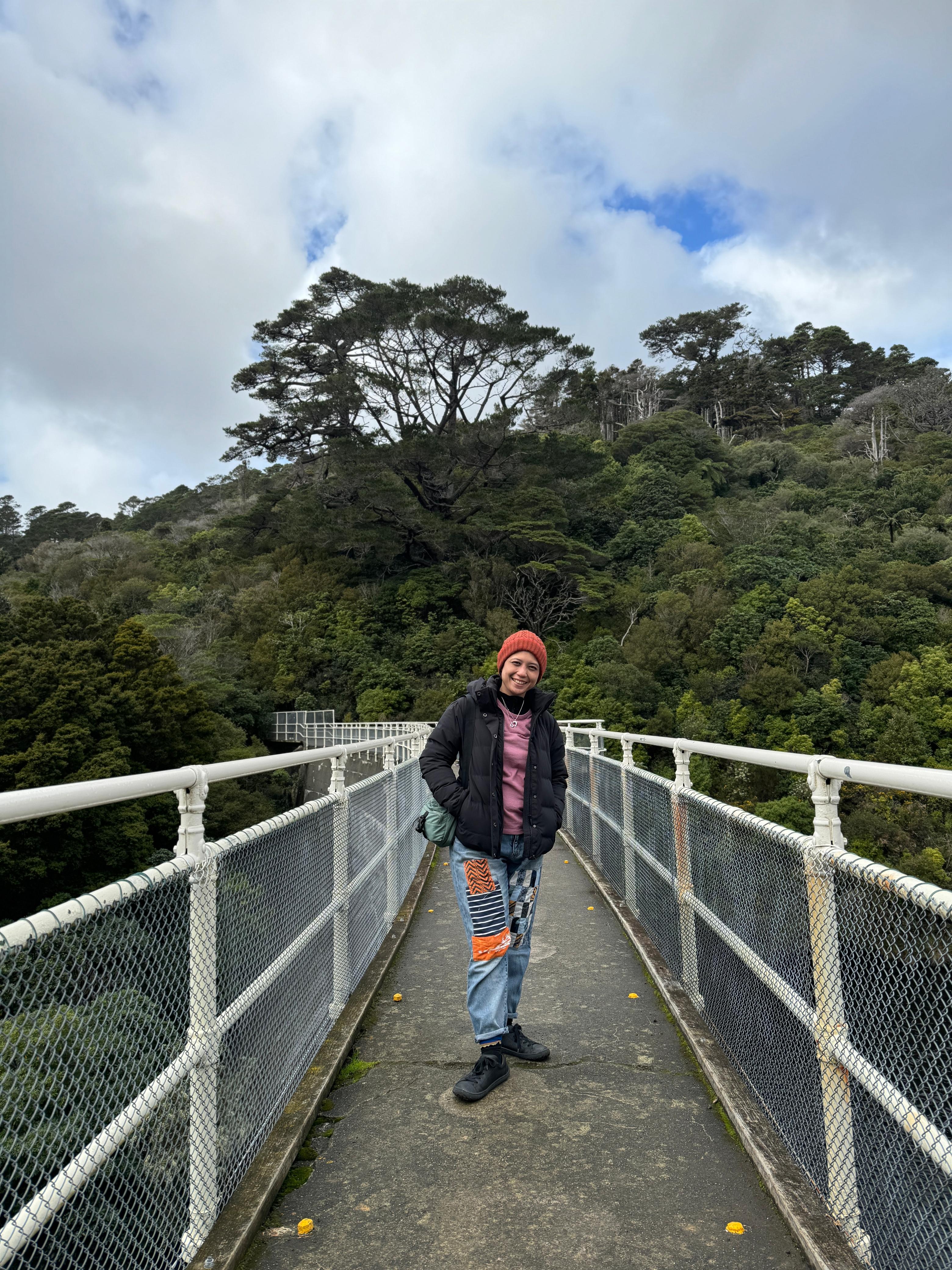
My mom, I don’t think I’ve ever heard her complain or declare herself “old.” At 60, she went with her friends to Bromo and enjoyed the sunrise. Every day during her retirement, I’ve never seen her lying at home doing anything. From socializing to teaching at LP Cipinang, my mom goes out daily.
Except when she was sick, and even then, it didn’t last a year.

===
According to research from Monash University in Australia, in the fifth decade of life (after a person turns 40), the brain starts to undergo a radical “rewiring” that results in diverse networks becoming more integrated and connected over the ensuing decades, with accompanying effects on cognition.
Early on, in our teenage and young adult years, the brain seems to have numerous partitioned networks with high levels of inner connectivity, reflecting the ability for specialized processing to occur. That makes sense, as this is the time when we are learning how to play sports, speak languages, and develop talents. Around our mid-40s, however, that starts to change. Instead, the brain begins becoming less connected within those separate networks and more connected globally across networks.
Several studies in the past ten years or so have found that the start of middle age — 40 and beyond — is often when people are the least happy, with the lowest levels of life satisfaction and highest levels of anxiety. Researchers attribute this to the fact that adults frequently face the pressures of raising children and looking after aging parents while simultaneously dealing with mounting financial and career pressures during the middle years. One study by researchers at England’s University of Warwick and Dartmouth College noted that women in the United States, on average, are most miserable at age 40. (Men tend to be at their lowest when they hit 50.)
Turning 40 can be traumatic for women due to fundamental physical changes: Hormone levels shift, metabolism slows down, and the onset of menopause isn’t far off, notes Clara Young, a psychologist and director of The Health and Happiness Center in California. “There are also emotional issues brought on by societal perspective that a woman is no longer youthful and beautiful over 40,” she says. In addition, we begin to be more aware of our mortality. “After 40, our body starts to show signs of aging. And distant death lurks around, making us question our life and its meaning.”
So why do these brain networking changes even occur in the first place? The reviewers offered some learned speculation. They noted that the brain is a resource-hungry organ, ravenous for simple sugar glucose. “The adult brain accounts for approximately 2% of total body weight but requires approximately 20% of total glucose supply,” they wrote.
But our bodies slow down as we age, and the brain becomes less efficient. So not only is the brain getting less glucose, but it’s also not putting the fuel to good use. Thus, the networking changes likely result from the brain reorganizing itself to function as well as it can with dwindling resources and aging “hardware.”
Yes, physiologically, there is something scientific about us. However, since everything depends on the brain, many ways exist to achieve the same goal. According to Dr. Tan, continuing to write with pen and paper, tying shoelaces, and practicing fine motor skills will help us a lot.
Proper diet, regular exercise, and a healthy lifestyle can keep the mind in good working order and delay networking changes, sometimes well into old age.
But for me…
Life is interesting. I have experienced many magical events from childhood until now. I have felt the burden of breathing every day because I was trapped in truly horrifying situations, to the point where I forgot how to exhale. It was so sad that I couldn’t smile or understand my emotions. It was so dark that I wasn’t used to seeing light.
The choice was either the sky was gray, full of storms and heavy rain every day, forcing me to hide underground to avoid being blown away by strong winds, or severe fires that made me run fast to avoid being burned.
At this age, I realized that hiding and running were my best survival efforts. But they were surviving, not thriving. Meanwhile, when I had children, I knew I had to thrive because understanding the emotions of two other people whose lives depend on me is difficult if I can’t regulate my emotions.
God continuously gives me chances, and I promise not to waste them. That’s why I keep learning and exploring “Who Am I” in living my life, which will last until God decides to stop it.
Because I know what it feels like to live under pressure, and I have always been saved again and again until now, I am filled with endless gratitude and complete faith in Allah. Think about it: when we board a plane and don’t know the pilot, we still trust him to take us to our destination, right? So why shouldn’t we trust Allah?
Allah has many creatures to look after, but we are special because He is not like me, limited by time and ability.
Ironically, many of us inherently know as little kids that we’re special. But as we grow up, the world has a way of chipping away at our sense of self. Eventually, when we enter our later years, it’s almost as if we finally remember what we knew when we were kids: We matter, and our stories matter.
If we are still given life until now, Allah trusts us and gives us chances repeatedly, which means we are special and matter. So, what should we worry about aging?

 YAMINA HASNI
Leave a comment